Shower Seating When the Bathroom Is Tiny
Aging Parent Rescue is a participant in the Amazon Services LLC Associates Program. We may earn a commission when you buy through links on our site, at no extra cost to you.
Aging Parent Rescue is a participant in the Amazon Services LLC Associates Program. We may earn a commission when you buy through links on our site, at no extra cost to you.
Four products solve the same problem in very different amounts of space. Measure the floor before you compare features.
| Type | Floor space needed | Best when |
|---|---|---|
| Fold-down wall seat | None — folds flat | Smallest rooms. Needs a wall that can be anchored into |
| Shower stool (no back) | Inside the enclosure only | They can step in unaided and sit steadily |
| Shower chair with back and arms | Inside, but wider | Poor trunk control, or needs arms to stand |
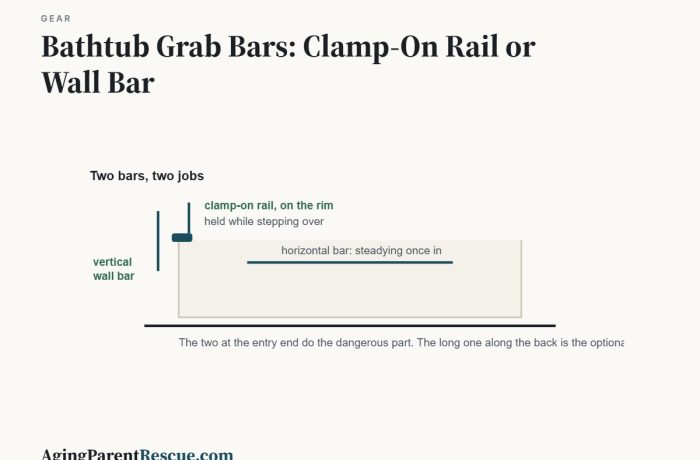
| Transfer bench | 14–18″ of floor outside the tub | Stepping over a tub wall is the risky part |
Measure these three
- Inside width of the enclosure at floor level
- Clear floor immediately outside it
- Tub wall width, if a bench is a candidate
The wall-mounted option people overlook
A fold-down seat takes no floor space at all when not in use, which in a very small bathroom is decisive. The catch is anchoring: it takes full body weight and needs proper structural fixing, ideally into blocking behind the wall.
Fold-down wall-mounted shower seat
Worth pricing an installer at the same time as the seat — the anchoring is the part that matters.
Pros
- Zero footprint when folded
- Seat height can be set correctly at install
- Nothing to slide on a wet floor
Cons
- Permanent installation
- Needs solid backing in the wall
- Not an option in a rental
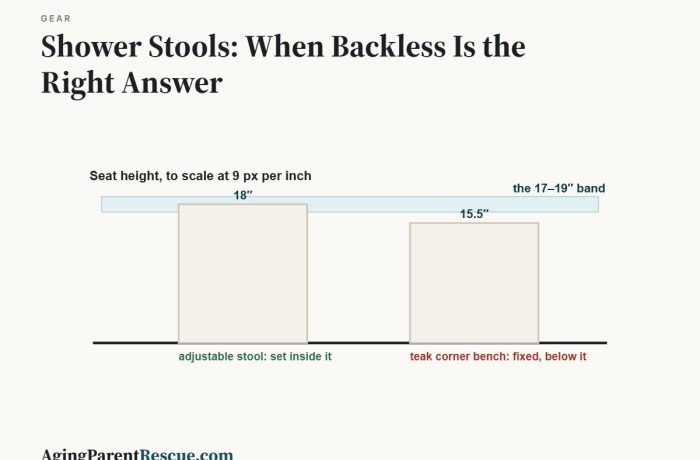
Set the seat at 17–19″ so transfers are level with the toilet and any wheelchair. Check the weight rating — usually 250–300 lb — and remember that a wall-mounted seat is only as strong as what is behind the panel.
If a wall seat is not an option: the small shower chair
In a rental, or where the wall has no solid backing, the answer is a freestanding small shower chair that lives inside the enclosure. The ones that work in a tight shower are triangular or corner-shaped, because a square-footprint chair wastes the two corners you actually have.
Look for a footprint under about 16″ on each side, rubber tips that grip wet acrylic rather than plastic feet, and a height you can set to match the seat height that suits them. A swivel top is worth having if the person turns to wash rather than reaching.

Best for a genuinely small enclosure
Triangular space-saving shower chair
A three-sided seat sits into a corner and leaves the middle of the floor clear, which is the only way to fit a seat and a standing adult into the same small shower.
- Corner footprint rather than square, so it uses dead space
- Adjustable legs, so the height can be set to the person
- Nothing permanent, so it works in a rental
Rating and review count checked on 10 September 2026. Price is not shown here because it changes; the button opens the current listing.
Measure the inside width at floor level first, not at the rim.
Two follow-on pages cover the choices this one does not: shower stools, when backless is right, and how to decide between a bench, a back and arms.