Drive Medical 4-Wheel Rollator: 7.5-Inch Wheels or 6-Inch
Aging Parent Rescue is a participant in the Amazon Services LLC Associates Program. We may earn a commission when you buy through links on our site, at no extra cost to you.

Wheel diameter on the standard Drive Medical four-wheel rollator. The other common model runs 6″ wheels. That single difference decides more than anything else on the spec sheet: the bigger wheel rides over a doorway lip and rough pavement, the smaller one is lighter and turns tighter indoors.
Wheel diameter as given on the manufacturer’s listings for the two standard four-wheel models.
Drive Medical sells more rollators than anyone, which is why searching the brand gives you a wall of near-identical results. Most of them are the same frame in a different colour. The decisions that actually matter come down to three things: how many wheels, how big they are, and whether you need the expensive line at all.
Four wheels or three
A four-wheel rollator has a seat. A three-wheel one does not, because there is nothing to sit over — the frame narrows to a single front wheel.
That makes the choice simpler than it looks. If the point of the thing is that they can stop and rest, you need four wheels. If the point is getting through a tight house and the person has no intention of sitting on it, three wheels turn in a smaller space and fold narrower.
In practice most people want the seat, and the ones who genuinely benefit from three wheels are those living somewhere with corners a four-wheel frame cannot make. Decide it on the floor plan, not on the price.
Why the wheel size is the real decision
Half an inch is the figure that matters here, because that is the maximum threshold height that can be crossed without a ramp. Door strips, the lip into a shower room, the transition between carpet and tile, the joint at the front door — most of them sit at or just under that.
A 7.5″ wheel meets that lip at a shallow angle and rolls over it. A 6″ wheel meets it steeper, catches, and the rollator stops while the person keeps going. That is the mechanism behind a lot of rollator falls indoors, and it is entirely predictable from the wheel size.
So: bigger wheels if they go outside or cross any threshold. Smaller wheels only if the whole life of the thing is on one level of smooth flooring, and the extra manoeuvrability is worth it.

Best for most people
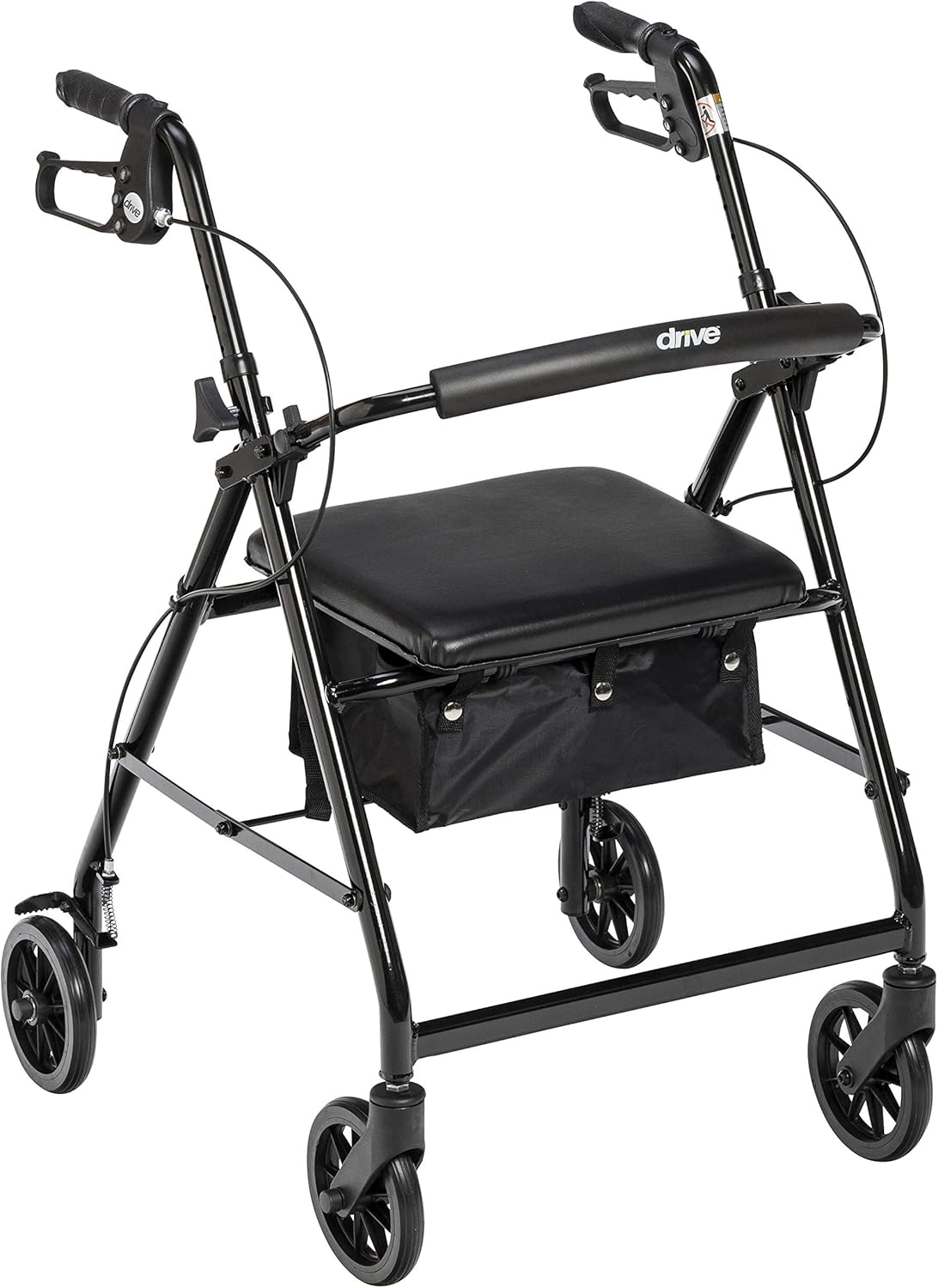
Drive Medical Rollator Walker with Seat, 7.5″ Wheels
The default four-wheel rollator, and the review count is not a coincidence — this is the model most American households end up with. The 7.5″ wheels are the reason to pick it over the aluminium version.
- 7.5″ wheels, which clear a normal door threshold
- Padded seat and a backrest strap for resting
- Loop hand brakes that also lock the wheels when parked
Rating and review count checked on 11 September 2026. Price is not shown here because it changes; the button opens the current listing.
Steel frame, so it is heavier to lift into a car boot than the aluminium model. That is the trade.
If it has to be lifted often
Drive Medical Aluminium Rollator, 6″ Wheels
The one to choose when somebody has to put it in and out of a car several times a week, or when the house has tight corners. Rated slightly higher than the steel model by the people who own it, with smaller wheels as the cost.
- Aluminium frame, appreciably lighter to lift
- 6″ wheels: better indoors, worse at thresholds and outdoors
- Folds narrower, which helps in a small hallway
Rating and review count checked on 11 September 2026. Price is not shown here because it changes; the button opens the current listing.
The model numbers, and why listings repeat
Drive Medical uses codes rather than names on the budget line, which is how the same rollator appears four times in your search results. The frame is identical; the code changes with the colour and sometimes with the seat width. If two listings show the same rating and the same review count, they are the same product — buy whichever is in stock in the colour they will not be embarrassed by.
The named line is different. Anything called Nitro is a separate design, with front wheels that swivel independently and a fold that stands upright on its own. It is several times the price, and whether that is worth it is a real question rather than a marketing one: the Drive Medical range compared, budget frame to Nitro.
Before you order: the two measurements
The doorway it has to pass. Measure the gap the person actually goes through, not the door you bought. An open hinged door eats about two inches of the frame, so a 28″ door gives roughly 26″. Standard rollators are wider than people expect: what to do when the rollator will not fit the doorway, and the clear width a walker really needs.
The handle height. Every one of these adjusts, and almost none arrive set correctly. Stand the person up beside it with their arms hanging relaxed: the grips should be level with the crease of the wrist. Too high and they shrug and lean forward; too low and they stoop, which is how a rollator turns into a trip hazard rather than a support.
Set the handles before the first walk, not after the first complaint. It takes a minute and it is the difference between a rollator that gets used and one that lives in the hall.