Water Heater Temperature Setting
Aging Parent Rescue is a participant in the Amazon Services LLC Associates Program. We may earn a commission when you buy through links on our site, at no extra cost to you.
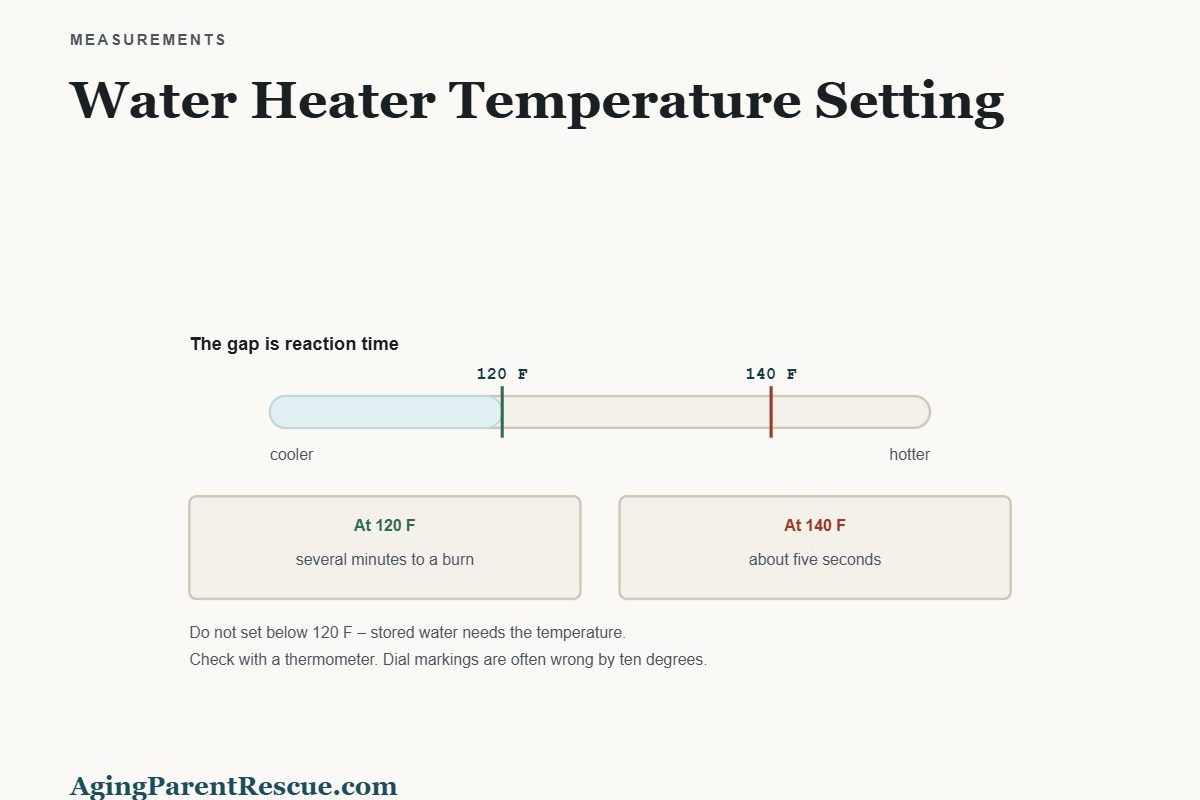
Thermostat setting at the tank. Aging skin is thinner and reacts more slowly, so the safety margin is smaller.
Widely recommended by burn-prevention programmes; also the usual anti-scald design point.
At 140°F — a common factory setting — a serious burn takes about five seconds. At 120°F it takes several minutes. That gap is entirely reaction time, and reaction time is exactly what is reduced in the people this site is about.
Two places to control it
- At the tank. Simple, free, affects the whole house. Gas heaters have a dial; electric usually needs a panel removed and the power off.
- At the fixture. A thermostatic anti-scald valve at the shower or basin holds a set temperature even if someone flushes a toilet. Better protection, but a plumbing job.
Turning the tank much below 120°F can let bacteria grow in stored water. 120 is the balance point, not a floor to keep lowering.
Check it with a thermometer, not a hand
Run the hot tap for two minutes, fill a cup, measure. Dial markings on water heaters are frequently wrong by ten degrees or more.