Rollator with a Seat: How Far Can They Actually Walk?
Aging Parent Rescue is a participant in the Amazon Services LLC Associates Program. We may earn a commission when you buy through links on our site, at no extra cost to you.
The usual seat rating on a standard rollator. It is a rating for sitting still with both brakes locked. It is not a rating for being pushed along while seated, which a rollator is not built for and which is the most common misuse of the seat.
Typical figure given on standard four-wheel rollator listings; check the one you buy.
Almost every four-wheel rollator has a seat, so “rollator with a seat” is really a question about the seat rather than about which model. People buy one when the problem has changed from balance to stamina: they can still walk, but not as far as the shop and back without stopping.
That is exactly what the seat is for, and there is one question that decides whether it is enough.
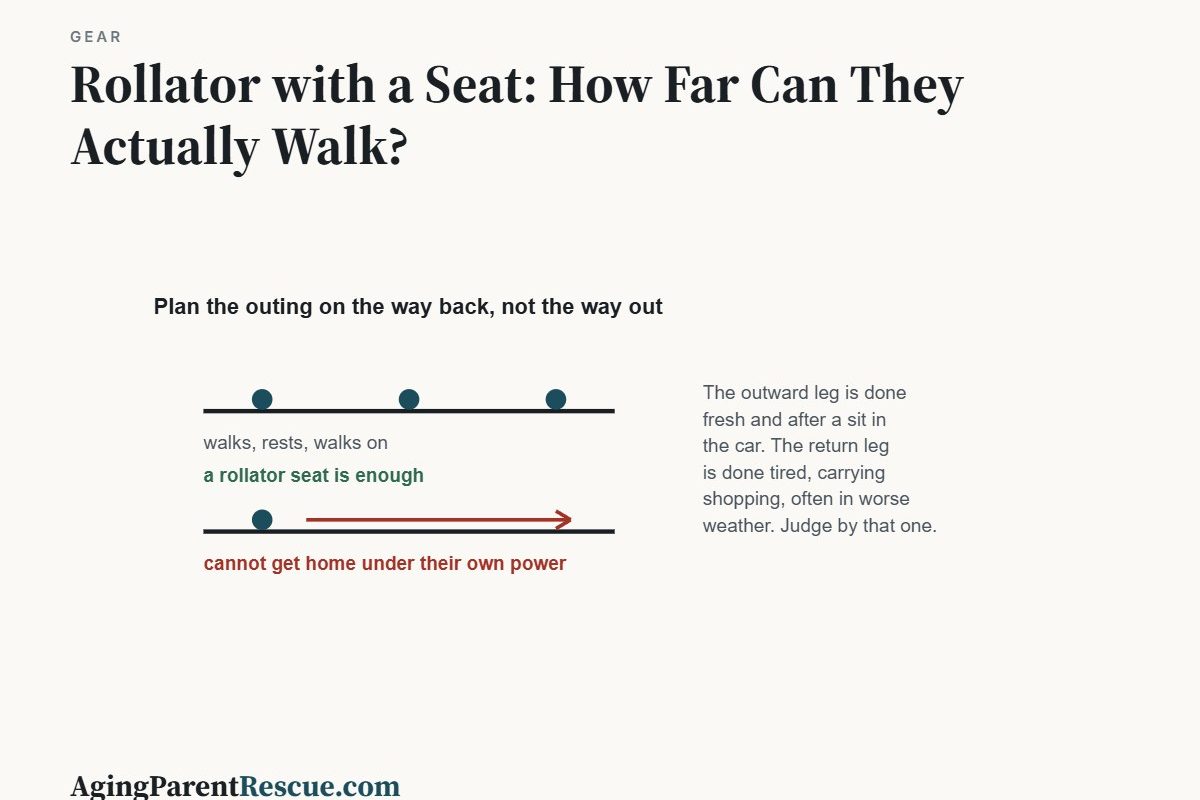
The test is the return journey
If they can cover the distance in stages — walk a bit, sit a bit, walk on — a rollator seat is the right product and it will transform what they can do. The seat turns an impossible distance into several possible ones.
If they genuinely cannot get back under their own power on a bad day, the seat is not the answer, because a rollator cannot carry them. That is a different product, and mistaking the two is how an outing ends with somebody sitting on a rollator in a car park while a relative works out what to do.
Best for most people
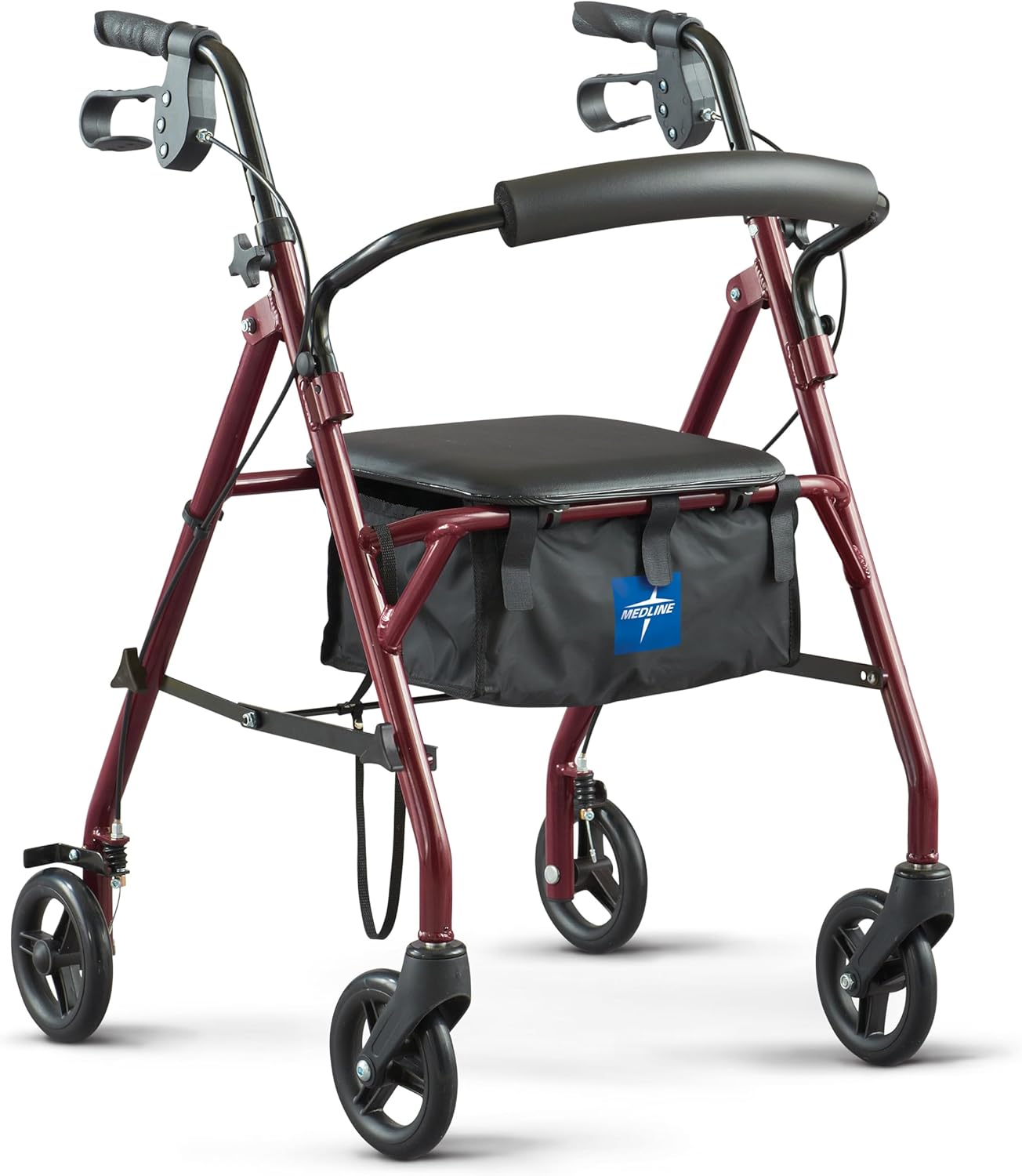
Medline Steel Rollator with Seat
A standard four-wheel rollator with a seat that is actually worth sitting on, and a review history deep enough to show how the brakes behave after a year. If stamina is the problem rather than balance, this is the ordinary, correct answer.
- Padded seat with a backrest strap behind it
- Loop brakes that lock the wheels for sitting
- Steel frame — sturdy, and heavier to lift into a car
Rating and review count checked on 15 September 2026. Price is not shown here because it changes; the button opens the current listing.
A rollator seat is safe when the wheels cannot move and unsafe when they can. Squeeze both brakes into the locked position — on most models that is pushing the levers down past their stop rather than pulling them — and check the wheels will not turn before the person commits their weight. Then sit back, not on the front edge. And do not push someone who is sitting on a rollator seat: there are no footrests, the feet drag, and the front castors can turn under load. If someone needs to be moved while seated, they need a chair built to be pushed. Anything about how far a person should be walking is a question for their physiotherapist, not for a product page.
When the seat is not enough: two-in-one walkers
A two-in-one converts between a rollator and a transport chair. In walking mode it works like any rollator. In transport mode the backrest moves, footrests fold out, and a companion pushes from behind using handles at the back.
The trade is real and worth understanding. These are heavier than a plain rollator, bulkier folded, and usually a little wider — which matters indoors. As a rollator they are slightly worse than a dedicated rollator; as a wheelchair they are slightly worse than a dedicated transport chair. What they buy is that the person does not have to decide, at the front door, which kind of day it is going to be.
For someone whose range varies a lot day to day, that is worth a great deal. For someone whose range is stable, buy the dedicated product.

If the range varies day to day
2-in-1 Rollator and Transport Chair
Converts between walking and being pushed, with proper footrests rather than an improvised sit-down. Heavier and wider than a plain rollator, so measure the narrowest doorway it has to pass before ordering.
- Folding footrests and rear push handles for transport mode
- Works as a normal rollator the rest of the time
- Wider and heavier — check doorways and the car boot
Rating and review count checked on 15 September 2026. Price is not shown here because it changes; the button opens the current listing.
Width is the usual regret with these. Measure the tightest gap in the house first: rollators and narrow doorways.
The seat is a perch, not a chair
A rollator seat sits higher than an armchair and higher than a toilet, deliberately, so that standing up again is a short push rather than a climb. That also means it is not a substitute for a chair: it has no arms to push off, the backrest is a strap, and it is on wheels.
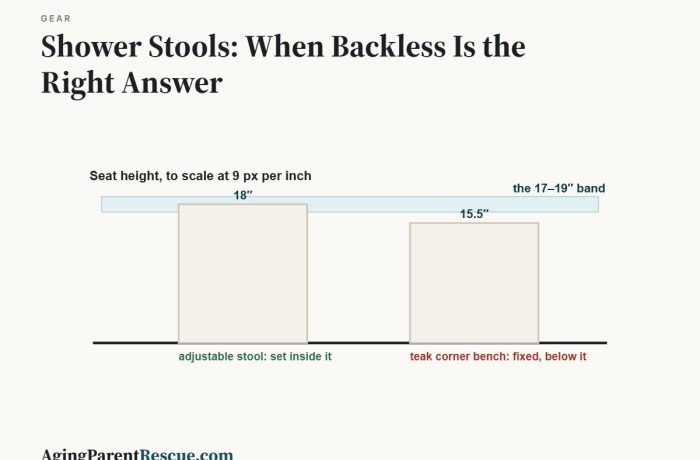
So it is the wrong thing to sit on at a kitchen counter, at a table, or anywhere a task is being done. For those, you want something in the 17–19″ transfer band with real arms: the seat height that makes standing up possible.
Making the seat usable outdoors
Two small things decide whether the seat actually gets used. The first is whether they can get to it — a rollator that catches on every threshold never reaches the bench, let alone becomes one: matching a threshold ramp to the rise, and why 7.5-inch wheels beat 6-inch outdoors.
The second is the bag. Almost every rollator has a pouch under the seat, and almost nobody uses it, so the shopping ends up hanging off the handles. Weight on the handles raises the centre of gravity and makes the frame tip when the brakes go on. Put it under the seat, where it belongs.
If you are still choosing between models rather than deciding about the seat, start here: how to choose a rollator.
“Walker with a seat” means a rollator
A senior walker with a seat is a rollator — the two phrases describe the same product, and searching for one will show you the other. A true walker, the kind with rubber feet that gets lifted and planted, cannot usefully have a seat: it has no wheels to roll clear afterwards and no brakes to lock it still.
Which is worth knowing because the two devices suit different people. If the person needs to take weight off a leg through their arms, they need the walker and cannot have the seat. If they can carry their own weight and simply run out of stamina, they want the rollator, and the seat is the reason to buy it.