Drive Medical Rollator Walkers Compared: Budget Frame to Nitro
What the Nitro line buys you over the budget Drive Medical frame: swivel wheels, an upright fold, less weight. Plus junior, bariatric and ordering the right parts.
What the Nitro line buys you over the budget Drive Medical frame: swivel wheels, an upright fold, less weight. Plus junior, bariatric and ordering the right parts.
The Drive Medical four-wheel rollator comes with 7.5in or 6in wheels, and that one number decides whether it crosses your thresholds. Plus three wheels versus four.
A bedside commode does three jobs at three different heights. How to set it, which type suits a sideways transfer, and what decides whether it keeps being used.
Three different products are sold as a bed rail, and they fix different problems. Which to buy, what ASTM F3186 means, and when a rail makes a fall worse.
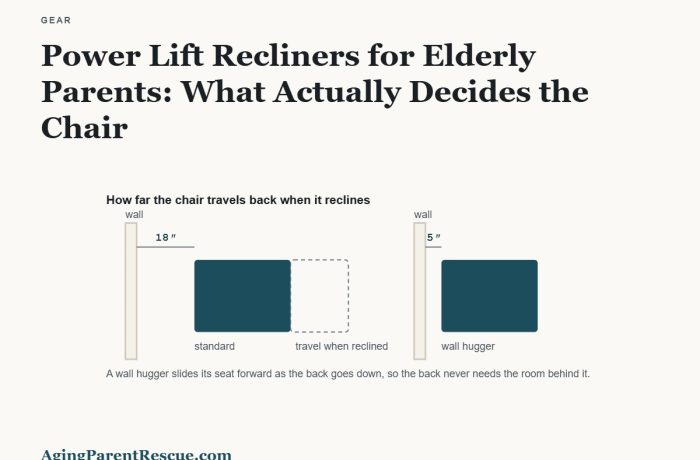
Wall clearance, recline type and seat size rule out most chairs before brand or fabric matters. Here is how to pick one, and what Medicare really pays for.
The three brands everyone recommends are sold through mobility dealers, not online. Here is what that buys you, what it costs you, and what to do if you already own one.
Seventeen to nineteen inches is the band that makes standing up possible and transfers level. Here is how to measure it on the person, not the furniture.
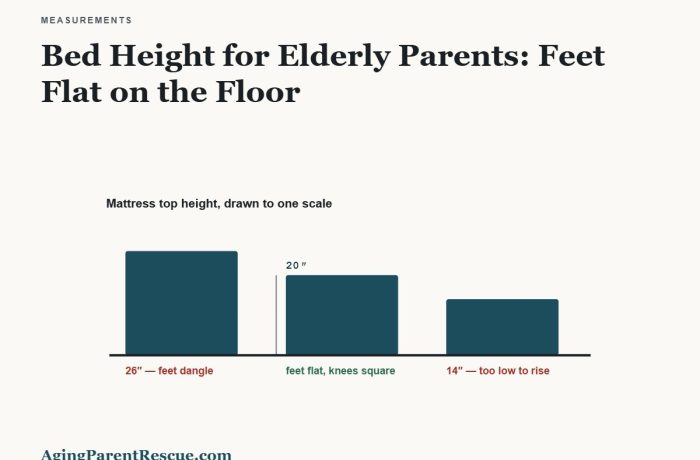
The right bed height puts their feet flat on the floor with knees near a right angle, usually 20 to 23 inches to the top of the mattress. Here is how to fix a bed that is wrong.
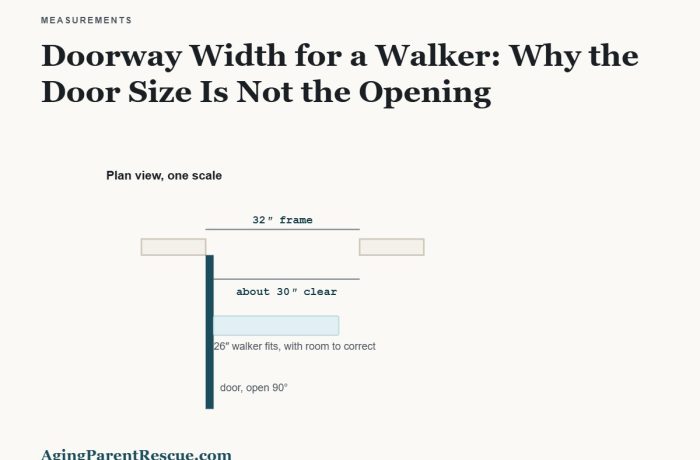
A 32-inch door leaves about 30 inches of clear opening, which suits most walkers. A 28-inch door leaves about 26, which does not. Measure the gap, not the slab.
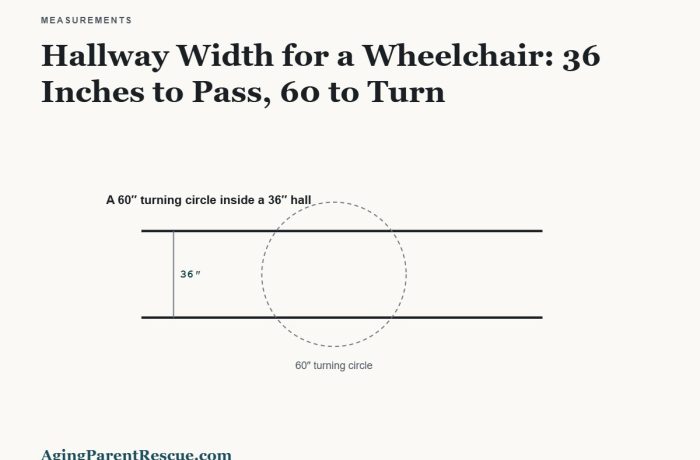
Thirty-six inches is enough to travel straight down a hall. Turning around needs sixty. Turning into a doorway needs more than either, which is the part that catches people.