Rollator with a Seat: How Far Can They Actually Walk?
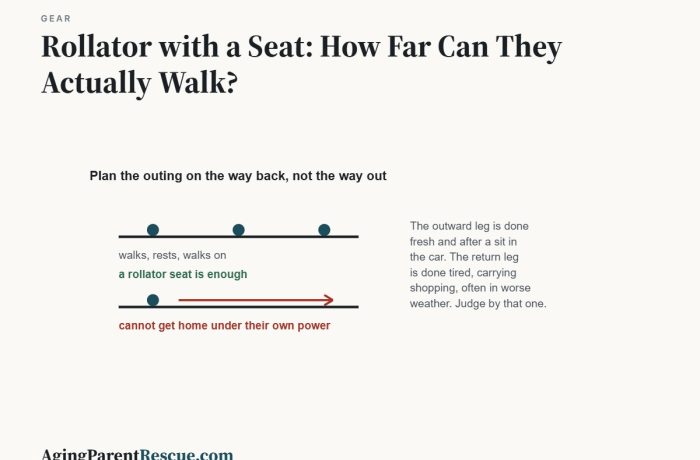
The seat answers fatigue, not distance. The test that decides whether a rollator seat is enough, how to use it safely, and when you need a two-in-one instead.
The seat answers fatigue, not distance. The test that decides whether a rollator seat is enough, how to use it safely, and when you need a two-in-one instead.
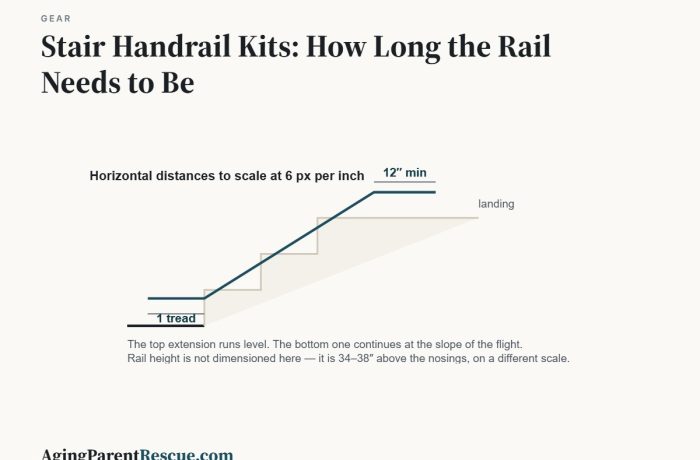
Kits are sold by step count and stop at the steps. The rail has to run 12 inches past the top and a tread past the bottom, plus what you are fixing it into.
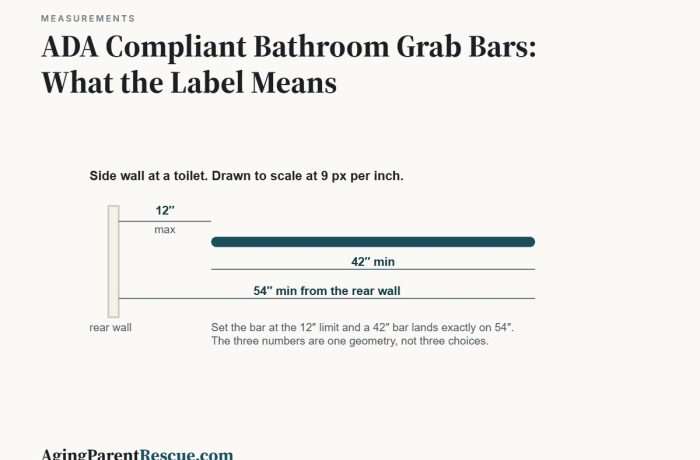
It certifies the bar, not your bathroom, and the ADA does not apply at home. The dimensions worth copying anyway, and why the fixing decides whether a bar is safe.
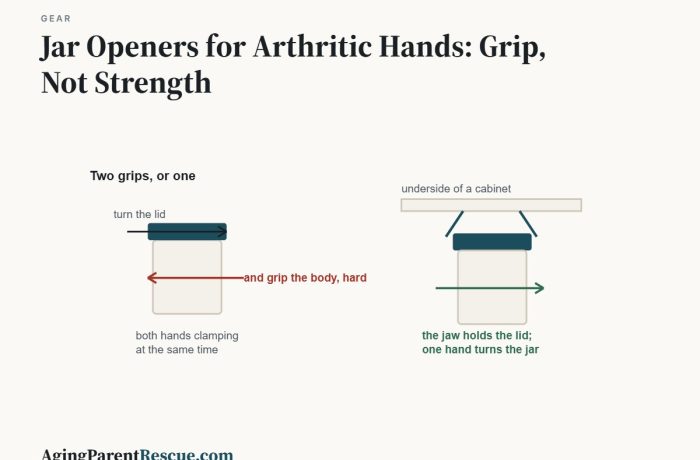
The problem is not torque, it is the hand holding the jar still. Which openers remove that grip entirely, which only help, and two tricks that cost nothing.
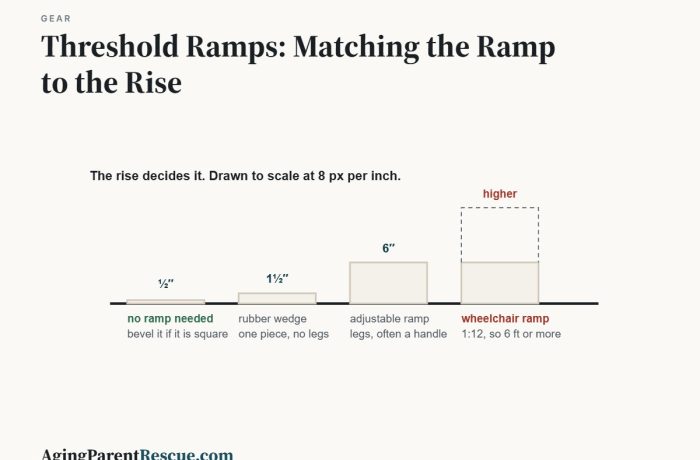
One measurement decides the product. What fits under half an inch, up to an inch and a half, up to six, and the point where you need a wheelchair ramp instead.
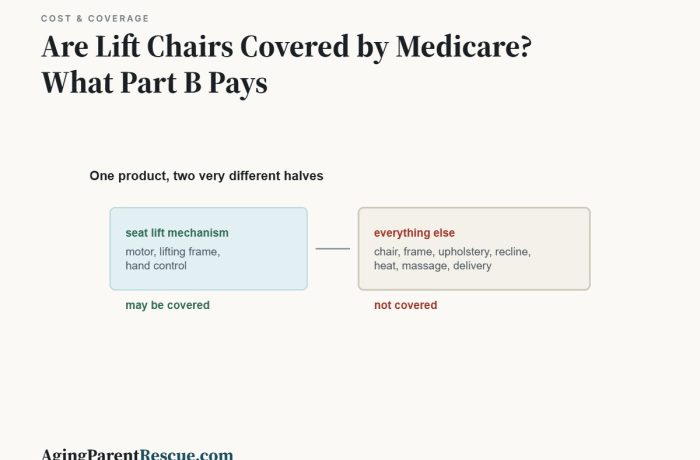
Medicare can pay toward the seat lift mechanism, not the chair, and only against a strict test. The criteria, what you pay, and when the claim is not worth chasing.
A transfer bench straddles the tub wall so nobody steps over it. The three measurements that decide fit, backrest or not, and the curtain problem nobody mentions.
Heavy duty can mean a higher weight rating or a wider seat, and they are different products. What the rating covers, and where the online market stops.
The massage on a lift chair is vibration and the heat is a lumbar pad. What that means for what you should pay, plus the reliability trade and one real safety limit.
A rollator supports balance, not body weight, which is why it is the wrong device for some people. How to choose one, and the three measurements that decide it.